

DSP/103 · April 8, 2026 · Dealer News · 7 min
FTC Online Pricing Crackdown: What Car Dealers Need to Change on Their Websites Now
By Nick Askew

By Nick Askew, Space Auto
For a while, a lot of the conversation around dealer advertising and pricing centered on the FTC’s proposed CARS Rule. But that is not the real story anymore.
The CARS Rule was vacated by the Fifth Circuit in January 2025 and later withdrawn in February 2026. That does not mean pricing scrutiny went away. In fact, the opposite is true. In March 2026, the FTC sent warning letters to 97 auto dealership groups making its position painfully clear: if a dealer advertises a vehicle price online, that price should be the real price a customer would actually have to pay, including all mandatory dealer fees, with only true government charges sitting outside that number.
That is the real shift dealers need to understand.
This is not about a new rule magically appearing overnight. This is about the FTC building an enforcement trail through lawsuits, settlements, and warning letters that all point in the same direction: stop advertising teaser prices that do not reflect reality.
What led up to this
The FTC did not wake up one morning and suddenly decide to care about dealer websites. This has been building for years.
Recent actions against dealer groups like Lindsay Automotive, Leader Automotive, Asbury Automotive, Manchester City Nissan, and others show a pattern the FTC is clearly focused on: dealers advertising one number online, then charging more through hidden fees, conditional rebates, forced add-ons, payment packing, or pricing that only applies if the customer finances a certain way.
In the Lindsay case, the FTC alleged that the dealership group advertised deceptively low prices online, told customers those prices were real, then increased the amount consumers had to pay through fees and conditions not reflected in the advertised number. The later settlement required disclosures around the total price, including mandatory fees, excluding only government charges.
In the Leader Automotive case, the settlement defined the advertised vehicle price as the full cash price for which the dealer would actually sell or finance the vehicle, again excluding only government charges. It also addressed misleading monthly payment advertising and required used-vehicle Buyers Guides to be made available online.
So while the CARS Rule is gone, the FTC’s position is not a mystery. The agency is still saying the same thing, just through enforcement instead of rulemaking.
What this means for dealer websites and digital retail
Here’s the practical takeaway:
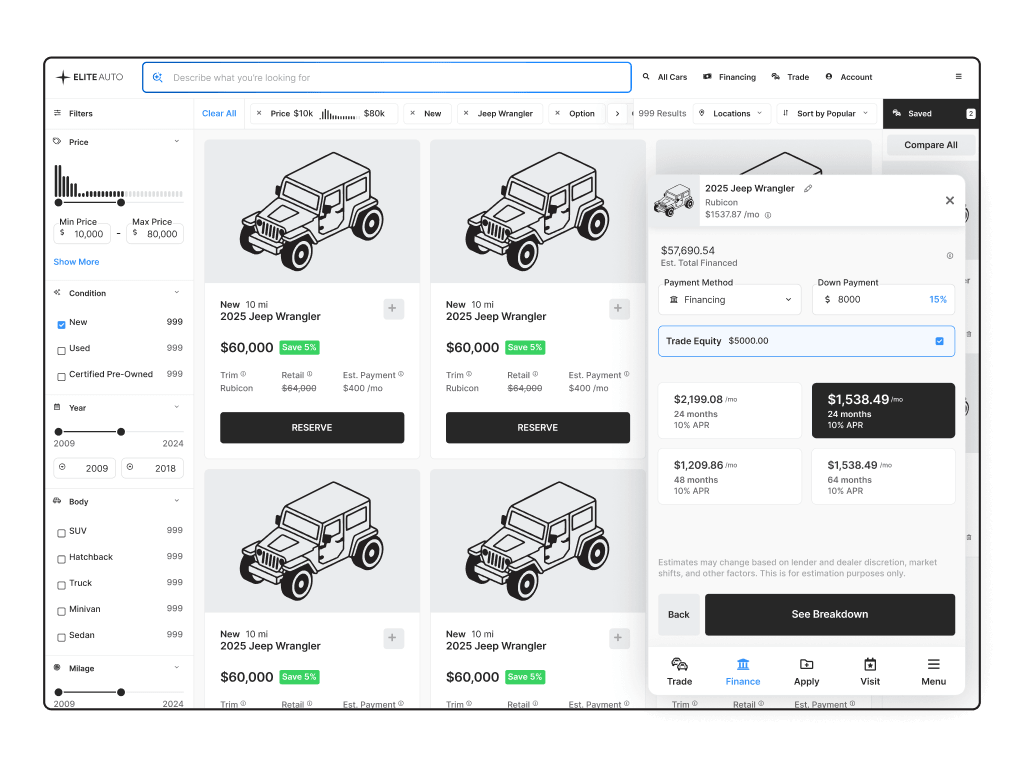
If your website, specials page, VDP, SRP, payment calculator, or digital retail flow shows a vehicle price, that number should match the real dealer selling price the customer would actually pay, with all mandatory dealer-imposed charges already included. Only taxes, title, registration, and other true government fees should sit outside that number.
That means a few things immediately.
1. Your SRP, VDP, specials pages, and digital retail flow need to agree
A shopper should not see one price on the search results page, a different one on the VDP, a different one in the payment tool, and a different one again once they enter digital retail.
That inconsistency is not just bad UX. It is exactly the kind of gap regulators are now focused on. The FTC’s warning letter explicitly tells dealers to compare advertised prices to actual transaction prices and confirm they match.
If your stack is fragmented, this is the time to fix it.
2. Mandatory fees need to be baked into the real displayed price
This is where a lot of dealers are exposed.
If there is a mandatory dealer fee, reconditioning fee, protection package, pre-installed product, or other unavoidable store-imposed charge, the FTC’s current posture is that it should not appear later like a surprise. It should already be reflected in the advertised vehicle price.
You can still itemize it. In fact, you should. But itemization should explain the number, not turn a lower advertised price into a higher real one later.
3. Optional products need to stay clearly optional
Optional products are not the problem. Pretending they are mandatory is the problem.
The FTC’s recent orders emphasize express, informed consent for charges. In plain English, customers need to understand what they are being charged for, how much it costs, and whether it is optional. That matters in F&I, but it also matters in digital retail.
If optional products are preselected, hidden in collapsed sections, or presented in a way that makes the shopper feel they are required to proceed, that is a bad place to be.
4. Rebate-based pricing cannot be your main headline number unless it is actually valid
The FTC’s March 2026 warning letters directly call out advertising a price that includes rebates or discounts not available to all consumers.
That matters because many dealer websites still show pricing based on stacked incentives that most buyers do not qualify for.
If a customer has to be military, a recent graduate, loyal to the brand, financing with a captive lender, and trading a unicorn to achieve the advertised number, that should not be your main displayed price.
Conditional discounts can still be shown. They just should not be used deceptively as the universal selling price.
5. Ghost inventory is now part of the compliance story
The warning letters also call out advertising unavailable or nonexistent vehicles.
This is a big deal.
If sold units sit live too long, if in-transit inventory is merchandised carelessly, or if syndicated listings continue advertising vehicles that are not actually available, you are not just creating a marketing problem. You are creating a pricing and advertising risk.
Inventory hygiene is no longer optional.
What dealers should do right now
This is the part that matters most.
If I were advising dealer leadership and digital marketing teams today, I would focus on six immediate actions.
Unify the “real price” across every touchpoint
Pick one authoritative vehicle selling price and make sure it powers:
SRPs
VDPs
specials pages
payment displays
digital retail
paid ads and third-party feeds
If different systems are calculating pricing differently, fix that now.
Separate mandatory charges from optional products
Mandatory dealer charges should already be reflected in the advertised selling price.
Optional products should be shown separately, clearly labeled, and require a real customer choice.
That distinction needs to be visible in the UI and true in the transaction logic.
Rethink generic payment calculators
A generic payment widget is not automatically illegal, but it becomes dangerous when it is built on assumptions the customer cannot see or qualify for.
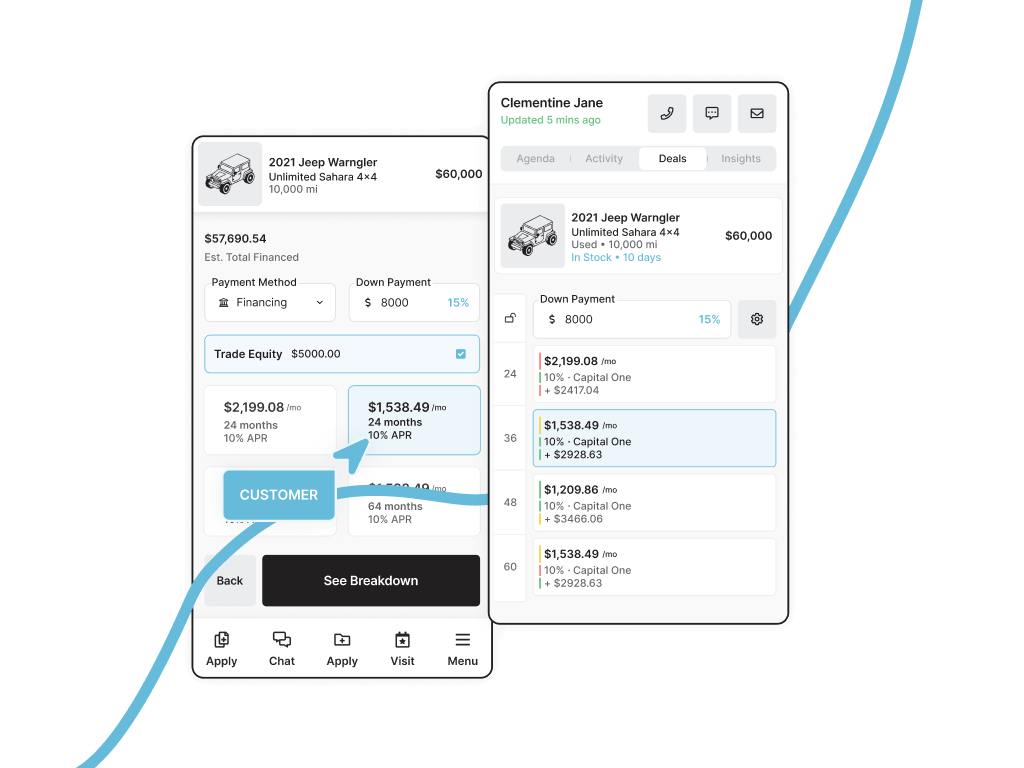
If you are showing payments on a VDP, make sure the assumptions are clear: selling price, term, APR, down payment, and what is excluded. If you cannot support that cleanly, it is worth asking whether the calculator is helping you more than it is hurting you.
Make fee visibility harder to miss
No, the FTC has not published a rule saying every fee section must auto-expand.
But recent settlement language does require online disclosures to be clear, conspicuous, and unavoidable.
That means hiding important pricing assumptions in collapsed accordions, tiny disclosures, or buried steps is not a smart bet.
Show the total price prominently. Show the assumptions clearly. Do not make the customer hunt.
Audit incentive logic and finance-conditioned pricing
Review where your website or tools are using:
captive finance assumptions
required down payments
loyalty/conquest rebates
military or college grad incentives
payment terms that are not broadly available
If those assumptions are driving the main displayed price, that is a red flag.
Tighten sold-vehicle removal and feed accuracy
Your IMS, website provider, and syndication stack need tighter controls on sold status, unavailable units, and stale vehicle data.
If the car is not really available, it should not still be advertised.
That sounds basic, but this is one of the easiest ways for stores to create avoidable risk.
What this means for your vendors and technology partners
This part matters for us as an industry.
Dealers are going to need technology partners that can support a cleaner, more defensible pricing model across websites and digital retail. Not just prettier merchandising. Not just more lead forms. Actual pricing consistency.
That means platforms need to support:
a true store selling price
reliable fee ingestion
clear separation of mandatory and optional charges
customer-specific incentive logic
consistent pricing across merchandising and retailing
faster sold-status updates
better auditability
The vendors who help dealers create more honest, more consistent pricing experiences are going to be in a much stronger position than the ones still helping stores game the display.
Moving forward safely
This is not about random FTC fearmongering, and it is not about pretending every dealer is doing something wrong... It is about reading the room correctly.
The FTC is telling the market that deceptive online vehicle pricing is a priority. The agency has already backed that up with enforcement actions, settlements, and now warning letters sent to nearly a hundred dealer groups.
For dealers, the safest move is not to wait for the next lawsuit or the next headline.
The safest move is to make sure the price a shopper sees online is the real price they can actually buy the vehicle for.
That is better for compliance. Better for trust. Better for conversion. And honestly, better for the industry.
Nick Askew
CEO, Space Auto